A dryer that quits heating is the call we run more than any other. Weekday visits across the Tri-Cities with a written price before work begins.
A dryer that quits heating is the call we run more than any other. Nine times out of ten the culprit sits on a short list — a burned heating element, a blown thermal fuse, a snapped belt, a worn idler pulley — and every item on that list rides in the van. You point at the machine, we open it, and you hear a firm number before a single screw comes out for good.
We handle gas and electric dryers across Kennewick, Pasco, Richland, West Richland and Benton City on a Monday-through-Friday schedule, with same-day slots most weekdays. Stackables, front-loaders in tight laundry closets, garage units baking in summer heat — bring us whatever you've got.
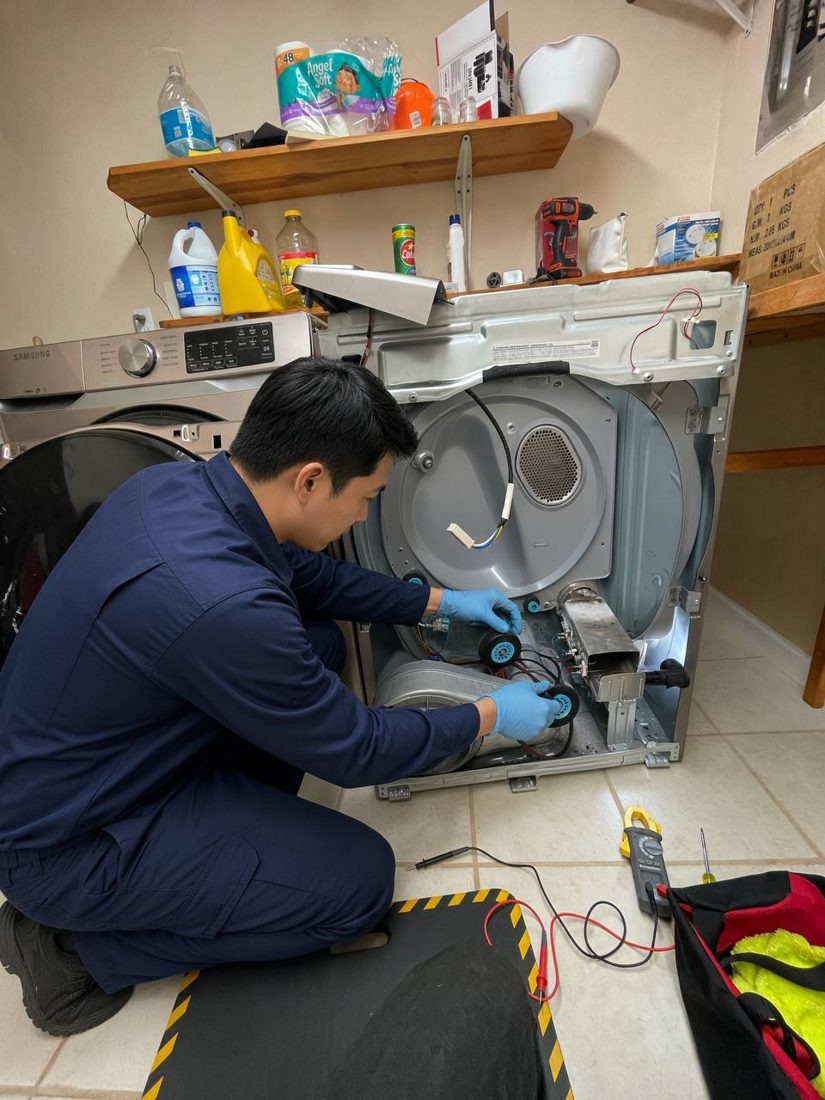
Usually the heating element or a tripped thermal fuse. On gas units, the igniter or gas valve coils. All of these are stocked repairs.
Often airflow, not the dryer itself — a clogged vent run or a duct crushed behind the machine. We test static pressure and tell you which it is.
A worn idler pulley, drum rollers, or a belt starting to shred. Cheap parts; the labor is in getting the cabinet open, and we do that daily.
Door switch, start switch, or that same thermal fuse. We trace it with a meter in minutes rather than guessing at parts.
Overheating from lint restriction or a failing motor. The diagnostic pins it down before anything gets replaced.
Snapped belt nearly every time. If the motor seized instead, we'll quote it and give you an honest repair-or-replace read.
Applies to the repair price, not the $99 diagnostic (which already credits toward the repair). One coupon per visit; can't be combined with other offers.
Call or leave a request — we confirm a weekday arrival window that fits your schedule.
A background-checked technician arrives inside the window with parts for the common failures.
You get one written price before any work starts. Take it or leave it — no pressure.
Most jobs wrap the same visit, and the $99 diagnostic folds into the bill.
First the meter confirms the element is open-circuit; we never swap on symptoms alone, because a tripped high-limit thermostat mimics a dead element perfectly. Cabinet comes apart, the old element housing comes out, and we inspect the chamber for lint scorch while it's exposed — that's the step cut-rate repairs skip. New element goes in with fresh thermostats if the originals show heat stress, the vent gets a static-pressure check so the new part doesn't cook itself, and the dryer runs a full timed cycle before we call it done. Typical bench time: about an hour.
A thermal fuse is a one-shot safety: it opens once and stays open. Replacing it takes minutes; the honest work is answering why it opened. We measure exhaust temperature under load, walk the duct with an anemometer reading, and inspect the blower wheel for lint packing. Skip that investigation and the new fuse blows inside a month — we'd rather not meet you again for the same fault. If the vent run itself is the villain, we clear it during the same visit and show you the before-and-after airflow numbers.
Squeals, rumbles and thumps each point at different hardware, and we let the sound guide the teardown. With the drum out we check all four wear points in one pass — belt glazing, idler pulley bearing, drum rollers, and the rear glide or bearing depending on design. Replacing only the loudest part is a false economy when the drum is already out, so the quote covers the wear set as one number. Machines leave quiet, not quieter.
A gas dryer that glows but won't light usually has tired gas valve coils; one that never glows has a cracked igniter; one that lights then quits early points at the flame sensor or a partially blocked exhaust triggering the high-limit. We carry all three parts and test in sequence with the burner assembly on the bench. Gas-side connections get leak-checked with solution before the panels go back on — non-negotiable, every time.
Nine of ten dead drums are a snapped belt — twenty-minute fix, bottom of the price range. The tenth is a seized motor or a jammed blower wheel, and that's a genuinely different conversation. We spin the drum by hand, listen to the motor under power, and check the blower housing for socks and lint bricks before quoting anything. If it's the motor on an older builder-grade machine, we'll lay the repair number next to typical replacement cost and let you make the call without pressure.
When a newer dryer stops on damp clothes or runs endless auto-cycles, the moisture sensor bars or the control board are the suspects. Sensor bars foul with dryer-sheet film — we clean and retest before condemning any electronics. Boards get diagnosed through the service-mode error history rather than guesswork, and we quote them only when testing proves the fault. It's the difference between a $200 visit and an unnecessary $350 one, and we're happy to explain which one you're in.
Yes, shut it off until it's inspected. A scorched smell usually means lint has packed near the element or the vent run is choked, and that combination is how dryer fires start. It's typically a quick fix once we're on site, but it isn't one to run through another weekend.
Usually yes — dryers are mechanically simple, and a belt, element or fuse repair runs well under half the cost of a decent new unit. If the motor or control board has failed on a builder-grade machine that old, we'll say so plainly and let you decide with the numbers in front of you.
When the vent is the reason your dryer struggles, we clear the run as part of the repair visit rather than booking a separate appointment. Long runs to a roof cap in two-story Kennewick homes are a frequent offender, and we'll show you the lint that came out.
We repair both gas and electric models, including igniters, flame sensors and gas valve coils. If we find an issue on the supply side of the shutoff valve, we'll tell you what belongs to a plumber, but everything inside the machine is ours.
Most wrap up in forty-five minutes to an hour and a half on site, because the frequent-failure parts travel with us. An oddball part for an older or high-end model can add a parts-order day or two, and we book the return trip before we leave your driveway.
Home turf — the shop is on W 4th Ave, so Kennewick slots fill first.
Call (509) 841-9131 or send the form above — weekday windows book fast, same-day when routes allow.