Ice makers pack a water valve, a thermostat, a motor, an ejector and a mold heater into a box the size of a loaf of bread, and any one of them can quietly quit. Weekday visits across the Tri-Cities with a written price before work begins.
Ice makers pack a water valve, a thermostat, a motor, an ejector and a mold heater into a box the size of a loaf of bread, and any one of them can quietly quit. We repair the icemakers built into refrigerators as well as standalone and under-counter units, and we stock the assemblies and inlet valves that cover the bulk of failures.
Kennewick's mineral-heavy water is genuinely hard on these little machines — scale chokes inlet screens and freezes valves in place. Half our ice calls end with a valve swap, a filter recommendation and a machine that fills like new.
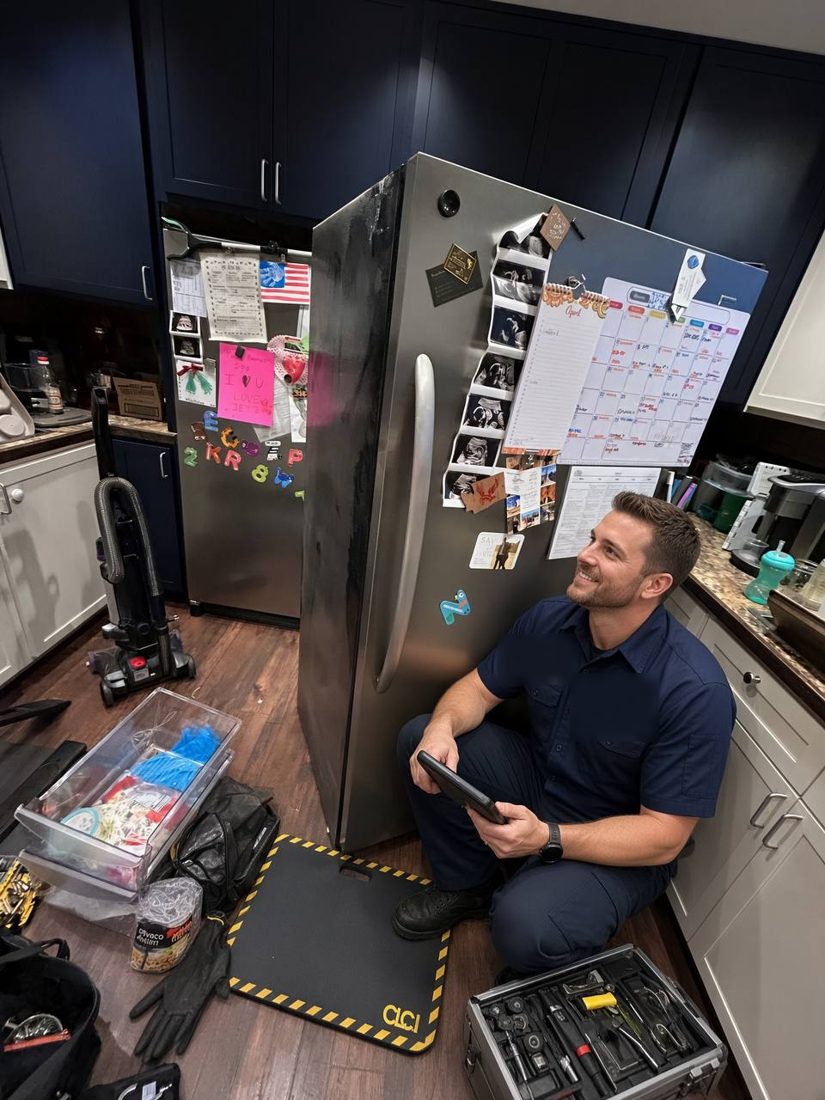
Frozen fill line, failed inlet valve, or the icemaker assembly itself. We test water-side first, then electrics — in that order for a reason.
Low fill volume: a scaled-up valve or clogged filter starving the mold. Classic hard-water signature in the Tri-Cities.
An overdue filter or a bin absorbing freezer odors. Cheap fixes; we'll also check the door seal that lets the odors in.
A worn auger motor or clumping from partial melts — which itself points to a defrost or door-seal issue worth catching.
The valve not shutting fully or a misaligned fill cup. One sheet of bin ice is the telltale.
The ejector fighting a jammed cube or a stripped module gear. Repairable — and cheaper before it snaps completely.
Applies to the repair price, not the $99 diagnostic (which already credits toward the repair). One coupon per visit; can't be combined with other offers.
Call or leave a request — we confirm a weekday arrival window that fits your schedule.
A background-checked technician arrives inside the window with parts for the common failures.
You get one written price before any work starts. Take it or leave it — no pressure.
Most jobs wrap the same visit, and the $99 diagnostic folds into the bill.
When the module itself has failed — stripped harvest gears, dead mold heater, cracked mold — replacing the complete assembly beats chasing components inside a sealed unit. We match the assembly to your fridge's harvest style, transfer the shutoff arm or sensor hardware, and set the fill volume to spec rather than trusting the factory default, which runs heavy on our water pressure. Then we cycle it through a full freeze-and-harvest before leaving, so 'fixed' means witnessed, not promised.
The dual-solenoid valve feeding your icemaker and dispenser is the part Tri-Cities water kills most reliably. Scale wedges the icemaker-side solenoid partly open — slow leaks that freeze into a bin-sized ice block — or fully shut, which reads as a dead icemaker. We test both windings, check inlet pressure, replace the valve and flush the line before reconnecting. If your fridge has a filter, we'll date-mark the next change; an expired filter is this valve's accomplice.
A fill line freezes for a reason — trickle-leak from a tired valve, a line sagging against the freezer wall, or fill volume set too high. Thawing the line takes minutes; finding and killing the reason is the repair. We steam the blockage clear, correct the cause, and re-route or insulate the line where the design invites a repeat. Done this way, the fix holds through winter instead of reappearing with the next cold snap.
Ice made but never delivered points down the dispenser chain: auger motor, its coupling, the chute flap and the paddle or button switch. We test the motor under load — a motor that spins empty but stalls against ice is still a failed motor — replace what testing names, and clear the crushed-ice ratchet that jams half these units. The bin gets emptied and washed as part of the job; old fused ice re-jams new hardware in a week.
Under-counter clear-ice machines run a recirculating pump, a cutting grid and their own drain — closer to a small commercial unit than a fridge icemaker, and they punish skipped descaling on our water. We service pumps, grids, thermostats and drain faults, and we'll set you up with the right cleaning cadence for the mineral load in your ZIP code. Countertop nugget machines get an honest verdict: some repairs pencil, and when one doesn't, we say so at the diagnostic.
An icemaker making less ice each week is telling on its environment: freezer temperature drifting high, a dusty condenser stretching freeze cycles, or fill starvation from the scale story above. We log the freezer's actual temperature, weigh a harvest against spec, and work the causes in cost order — cheapest first, always. Cloudy or off-tasting cubes get the filter-and-bin treatment in the same visit, under the same $99 that credits toward whatever we fix.
Fair question. A typical repair lands between $240 and $395, which buys a machine that produces reliably for years — most failures are a single tired component, not a systemic collapse. If the whole refrigerator is near end of life we'll tell you, and trays are a fine bridge until then.
Production drops when the freezer struggles to hold temperature — hot kitchens, frequent door openings, or dusty condenser coils all stretch the freeze cycle. The icemaker is often innocent; the visit checks the freezer's side of the bargain before condemning the little machine.
Yes — nugget-ice countertop units, under-counter clear-ice machines and freestanding models, alongside every refrigerator-integrated style. Under-counter machines have their own drain and cleaning cycles, and skipping the descale routine on our water is the failure we see most.
On Tri-Cities water, noticeably. A fresh filter protects the inlet valve from sediment, keeps cube size consistent and improves taste immediately. We'll match the right cartridge to your model during the visit — bring your old filter's number if the fridge has one installed.
Different mechanism, same appointment. Dispensing runs through a chute flap, auger motor and switch chain in the door, separate from ice production. We diagnose both sides during one $99 diagnostic, and the credit applies whichever repair you approve.
Home turf — the shop is on W 4th Ave, so Kennewick slots fill first.
Call (509) 841-9131 or send the form above — weekday windows book fast, same-day when routes allow.